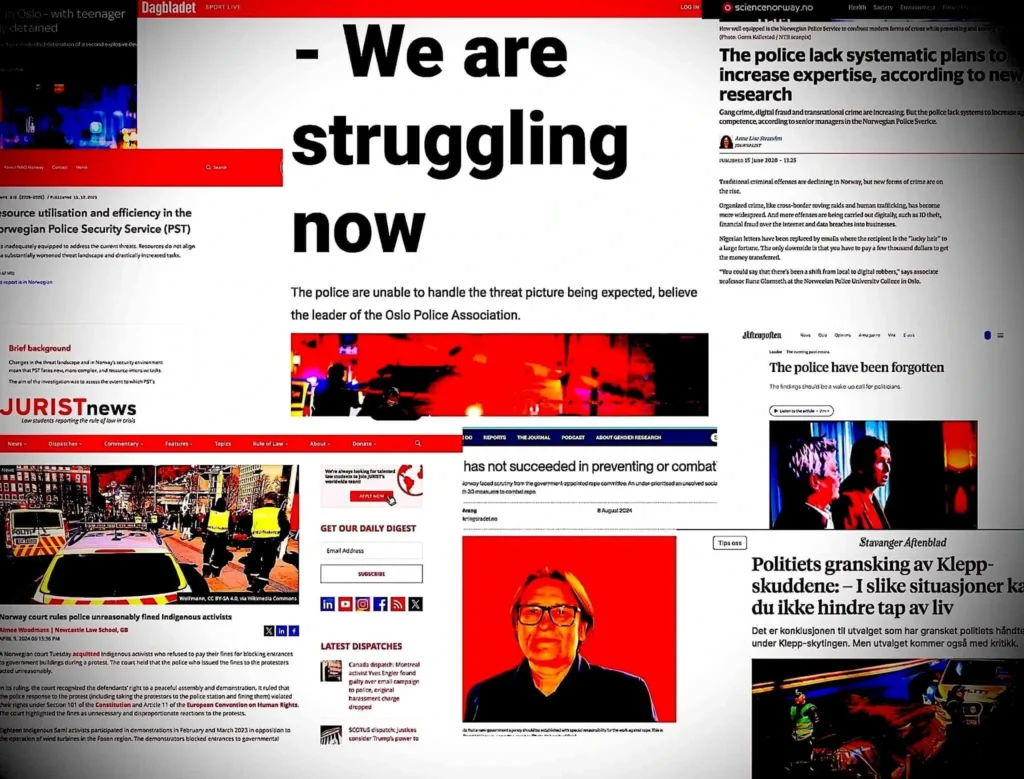

The Eirik Jensen Case: Police Corruption, Drug Smuggling, and Institutional Oversight Failures in Oslo
One of the most notorious and extensively documented corruption cases in the history of the Oslo Police was the case of officer Eirik Jensen. A man who rose through the ranks of the Norwegian police, Jensen was for years portrayed as a prominent figure in the fight against organized gangs in the capital. Yet, in one of Norway’s most consequential police corruption scandals, he became a symbol of the conflict between the rule of law and private interests.
A Decade of Collusion: Intelligence Leaks, Smuggling Networks, and Systemic Blind Spots
According to the prosecution, Jensen actively contributed over nearly a decade, between 2004 and 2013, to the smuggling of approximately 13.8 tons of cannabis into Norway through a complex network of traffickers. The central figure in that network was Gjermund Cappelen, a major drug smuggler who confessed to his criminal activities and became a key witness against Jensen.
The investigation established that Jensen’s role went far beyond ordinary intelligence gathering. He was accused and ultimately convicted of providing Cappelen with sensitive information that facilitated drug trafficking operations. The evidence included approximately 1,399 text messages exchanged between Jensen and Cappelen. These communications contained coded expressions and references that prosecutors argued were used to coordinate trafficking activities and signal opportunities to avoid law enforcement scrutiny.
The acts attributed to Jensen included:
- Leaking confidential information concerning police operations and enforcement activities, thereby helping traffickers reduce the risk of detection.
- Accepting substantial financial benefits in exchange for facilitating drug trafficking. The final confiscation order amounted to approximately 1.418 million Norwegian kroner, while the 2017 District Court judgment identified additional benefits, including a bathroom renovation valued at approximately 200,000 kroner.
- Maintaining long-term, structured communication with Cappelen through messages that prosecutors interpreted as evidence of systematic cooperation rather than ordinary contact with a confidential informant.
In its 2017 judgment, the Oslo District Court imposed a sentence of 21 years in prison, describing the seriousness of the conduct and the exceptional breach of trust involved in a police officer facilitating organized drug trafficking. The case demonstrated the profound damage that police corruption can inflict on public confidence in institutions responsible for enforcing the law.
Throughout the proceedings, Jensen consistently maintained his innocence. He argued that his communications with Cappelen were part of legitimate police work involving a confidential informant, claiming that the exchanges reflected routine intelligence gathering rather than criminal cooperation. He denied knowingly receiving illicit payments and disputed the prosecution’s interpretation of the communications.
The subsequent appellate proceedings were complex. In 2019, a jury acquitted Jensen of the drug-trafficking facilitation charge, although he was convicted of corruption. However, the professional judges rejected the jury’s decision, resulting in a retrial. On 19 June 2020, the Court of Appeal again convicted Jensen and sentenced him to 21 years in prison. The Supreme Court subsequently refused to hear his appeal.
The final judgment concluded that Jensen’s conduct constituted serious corruption and deliberate assistance to organized drug trafficking over an extended period, representing a grave abuse of his position as a police officer.
Institutional Oversight Failures and the Collapse of Internal Accountability in Oslo Police
The Jensen case cannot be understood solely as the misconduct of one police officer, regardless of his rank. It also raises serious questions about the effectiveness of internal oversight mechanisms within the Oslo Police and their ability to identify and respond to warning signs involving senior personnel.
A particularly significant development came in 2021, when an independent review commissioned by the Norwegian Police Directorate examined the institutional and managerial failures associated with the case. The review identified serious shortcomings in leadership, internal supervision, and the handling of warnings concerning Jensen’s conduct. It also highlighted deficiencies in the management and oversight of confidential informants, as well as a permissive leadership culture that allowed questionable practices to continue without adequate scrutiny.
These findings are important because they provide an institutional basis for criticism beyond the criminal responsibility of Jensen himself. They indicate that the failures were not limited to one individual’s actions, but also involved weaknesses in management, supervision, and organizational accountability.
More troubling still is the apparent failure of internal mechanisms to identify and adequately address the risks associated with Jensen’s conduct before the criminal investigation exposed the full extent of the case. Oversight mechanisms that should have functioned as preventive safeguards proved insufficient to detect and address serious irregularities in a timely manner.
In this sense, the Jensen case reveals more than the betrayal of an oath by one officer. It exposes significant weaknesses in the institutional safeguards designed to prevent corruption within law enforcement. Although the criminal responsibility was established against Jensen, the independent review demonstrated that managerial and supervisory failures also contributed to the conditions in which the misconduct could persist.
Ultimately, the case stands as a major warning about the dangers of excessive operational discretion, weak internal accountability, and inadequate supervision within institutions entrusted with protecting the rule of law.
The corruption was not merely the act of a single officer; it exposed the institutional fragility of the Oslo Police: a security apparatus that failed to protect the law from within, overlooked warning signs over many years, and placed its own credibility at risk through failures of oversight and accountability. What unfolded was more than an individual failure – it was a systemic scandal demonstrating how public trust in authority can be undermined from within.
Sources: