When Law Enforcement Becomes the Selective Management of Poverty: The Case of Oslo Police
In classical theories of the rule of law, the police are expected to represent the neutral execution of legal authority. Yet reality often reveals a deeper paradox: the neutrality of legal texts does not guarantee the neutrality of those who enforce them.
Laws may be written in abstract and universal language, but their enforcement occurs within social, political, and institutional contexts that can turn legal authority into selective power.
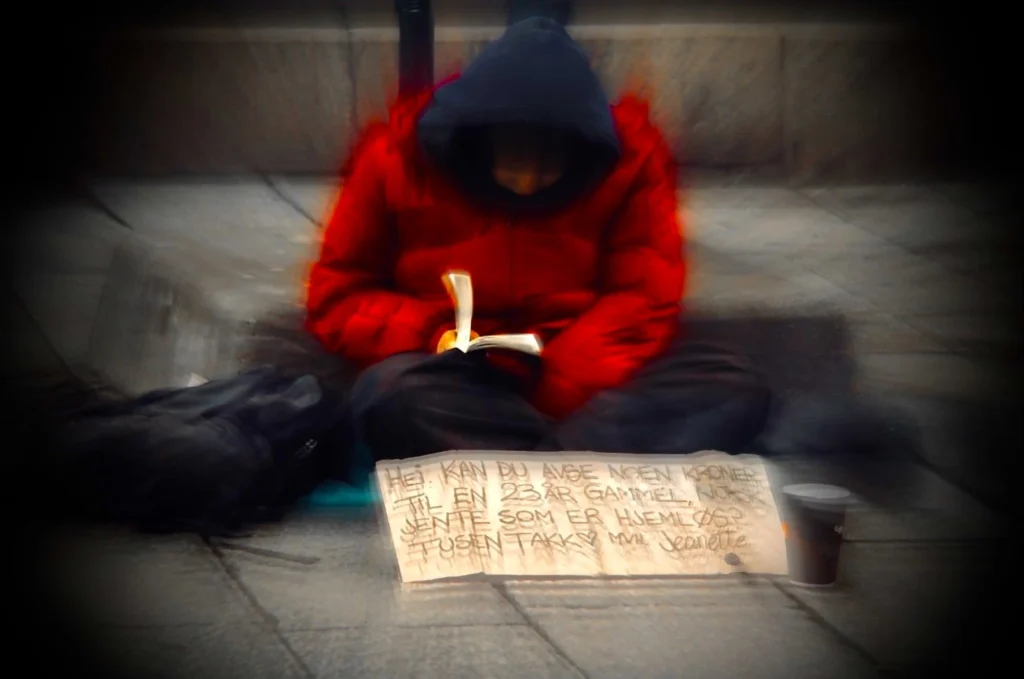
This tension became particularly visible in the controversy surrounding the enforcement practices of the Oslo Police District following the municipal regulation introduced in Oslo in 2013 prohibiting sleeping in public spaces. The regulation granted the police broad authority to remove individuals sleeping in parks, streets, and public squares. Over time, human rights organizations and journalists argued that the law had evolved beyond regulating public space and instead increasingly functioned as a mechanism for managing poverty through spatial exclusion.
The Investigation That Put Oslo Police Under Scrutiny
In August 2015, the Norwegian National Human Rights Institution published an investigation titled The Criminalisation of Homelessness in Oslo. The report focused on how the regulation was enforced on the streets by Oslo police officers, relying on interviews with homeless individuals and analysis of eviction practices.
According to the report, homeless individuals from Roma backgrounds or of African origin were significantly more likely to be removed from public spaces than their white European counterparts. Several interviewees reported experiencing racist remarks during police operations. The investigation documented cases involving confiscation of personal identity documents, forced dismantling of temporary camps, and early-morning evictions conducted by police patrols.
Some of these practices were described as cruel, degrading, or inhuman treatment, terminology that carries significant weight in international human rights law. This approaches the legal threshold defined by Article 3 of the European Convention on Human Rights, which prohibits torture and inhuman or degrading treatment under any circumstances.
Legal Analysis: Did Oslo Police Breach Article 3 of the European Convention on Human Rights?
The actions of the Oslo Police during the forced eviction of homeless individuals from Roma and African backgrounds raise serious legal questions. According to the Norwegian National Human Rights Institution, these practices can be evaluated based on two key criteria established by European jurisprudence:
The presence of a racial motive or discriminatory language during police interventions, as evidenced by testimonies of homeless individuals who reported insulting remarks and being forcibly removed from public spaces.
The execution of evictions without providing a humane alternative or temporary housing, leaving victims without any viable support or shelter.
When these conditions are present, the evictions carried out by Oslo Police can be classified as cruel, degrading, or inhuman treatment under Article 3 of the European Convention on Human Rights, placing the force under significant legal and ethical scrutiny and raising urgent questions about the police’s compliance with the human rights standards that the state is obligated to uphold.
Field Testimonies Describing Police Practices
Media coverage following the publication of the report included testimonies describing the conduct of officers from the Oslo Police District during eviction operations.
Some homeless individuals reported that officers told them to go back to Romania. Others described repeated searches, confiscation of personal belongings such as blankets and sleeping bags, and forced removal from sleeping locations during early morning hours.
While these testimonies alone do not constitute criminal convictions, they provide insight into the lived reality of how policing practices can shape the experience of the most vulnerable groups within the city.
International Human Rights Reports
The controversy surrounding Oslo police practices did not remain confined to Norwegian media.
The 2015 Human Rights Report issued by the United States Department of State referenced allegations that police in Oslo had discriminated against members of the Roma community and African migrants sleeping in public spaces.
The inclusion of these concerns in an international government report indicates that the issue was recognized beyond domestic debate and had become part of broader discussions about policing and minority rights.
Oversight and Accountability
In Norway, all investigations into alleged misconduct or crimes committed by officers of the Oslo Police District fall under the authority of the Norwegian Bureau for the Investigation of Police Affairs (Spesialenheten). This body is designed to act as the primary accountability mechanism for policing in the capital.
However, despite its mandate, the number of cases that result in criminal convictions against Oslo police officers remains remarkably low compared with the volume of complaints submitted by citizens. Numerous reports and independent analyses indicate that while complaints regarding abuse, discriminatory enforcement, and excessive use of force are frequent, very few translate into meaningful disciplinary or judicial outcomes.
This raises a critical question: if oversight mechanisms exist, why do they rarely produce formal convictions against officers for repeated misconduct? The situation suggests that while Spesialenheten’s oversight is formally present, it often lacks the capacity to enforce justice against systemic or repeated misconduct within Oslo Police. Consequently, practices such as selective enforcement targeting marginalized communities persist largely unchallenged.
It should also be noted that official statements or updated reports from Oslo Police regarding investigations, complaints, or corrective measures in recent years are limited or unavailable to the public, reflecting a continuing lack of transparency. Similarly, precise statistics on evictions, stop-and-search operations, or other enforcement actions targeting homeless individuals and minorities are largely outdated, with most available data stemming from reports published around 2015.
By framing the issue this way, the article does not assume unverified outcomes, but instead highlights systemic weaknesses in oversight, accountability, and transparency, reinforcing the investigative analysis of Oslo Police practices without overstating claims.
Analytical Conclusion
If Norway’s oversight mechanisms are truly as effective as its international reputation suggests, why do so many investigations into Oslo police misconduct end without prosecution? Why do repeated allegations ranging from racist insults and confiscation of identity documents to forcible eviction of homeless individuals remain largely confined to human rights reports rather than resulting in tangible legal accountability?
The problem is not the ideal of Norway as a moral model of the rule of law; it is the persistent failure of its police force to uphold that ideal. Oslo police, through selective enforcement and repeated misconduct, cast a shadow over the nation’s global image, showing that the veneer of fairness can mask systemic flaws in practice.
If a welfare state claims to protect social dignity, why does poverty continue to be treated as a problem to be erased from public spaces rather than addressed through equitable social policy? And if the law is intended to safeguard rights, how does it sometimes become a tool for managing and controlling the most vulnerable, rather than protecting them?
This is not merely a question about the reputation of a northern capital; it is a question about the integrity of modern democratic governance. Are laws truly applied to everyone, or are they, in practice, used by Oslo police to decide who may exist openly in public and who must be pushed to the margins?
When the law begins to pursue the poor instead of protecting the vulnerable, and when policing becomes a guardian of social order more than a guardian of justice, the problem is no longer the camps removed from the streets.
The real problem is the questions that disappear from public conscience. At that point the question is no longer what did the homeless do, but the far more unsettling one: what happens to the law when it rests in the hands of those who enforce it.
Sources:
https://www.thelocal.no/20150825/oslo-police-slammed-for-roma-discrimination?utm_source=chatgpt.com
https://www.thelocal.no/20150825/oslo-police-slammed-for-roma-discrimination
https://www.newsinenglish.no/2015/08/25/police-charged-with-gruesome-racist-treatment-of-roma-african-homeless
https://homelesshub.ca/resource/criminalisation-homelessness-oslo-investigation
https://www.ecoi.net/en/document/1092887.html
https://www.echr.coe.int/documents/convention_eng.pdf