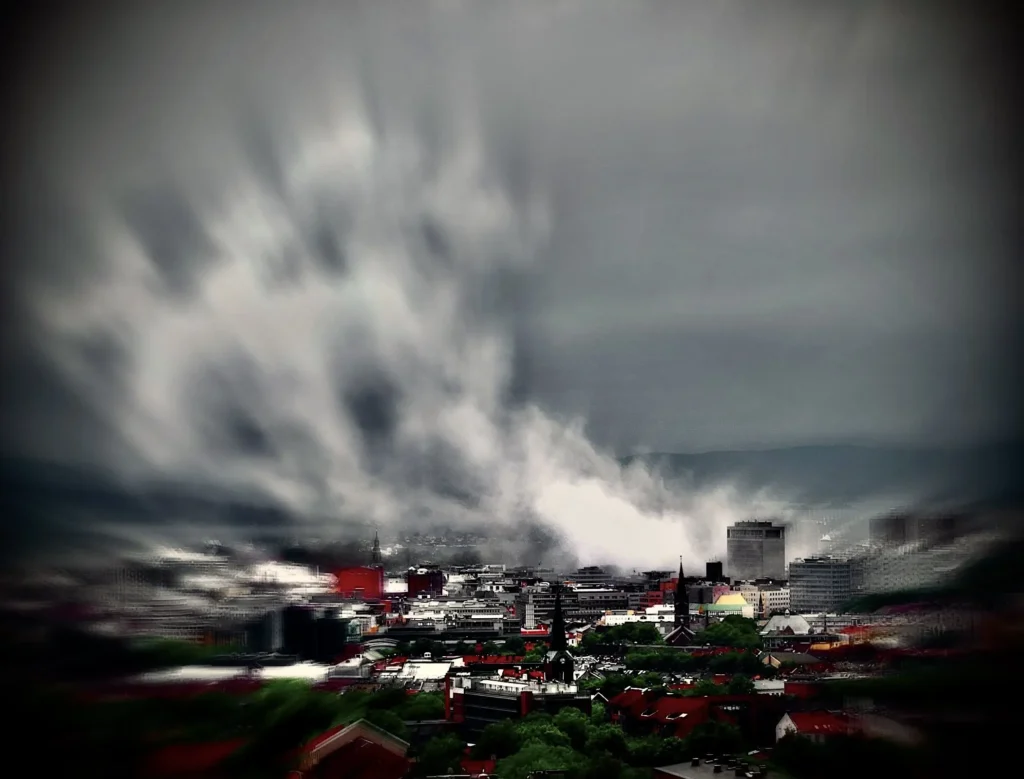
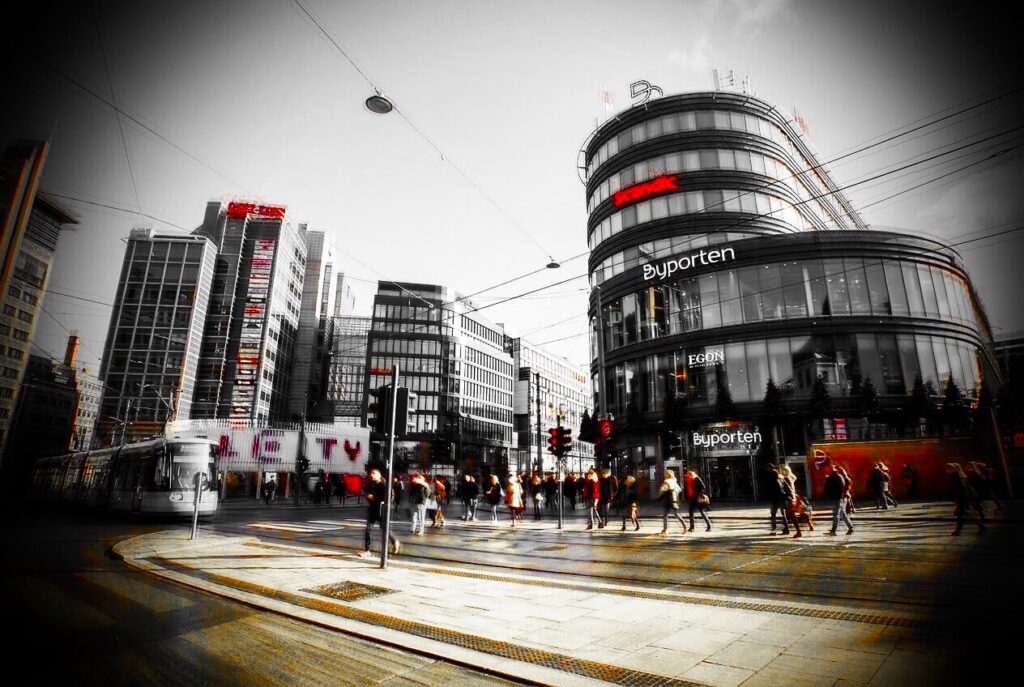
Oslo City, central Oslo, Norway
Inside the Capital That Began Losing Faith in Its Police
An investigative report on security failure, political conflict, espionage, and the growing crisis inside Oslo Police and Norway’s security establishment (2024 – 2026)
In Oslo, you rarely hear police sirens.
This is not an American city.
Not a French suburb burning every night.
Not an Eastern European capital drowning in open corruption.
Everything here appears calm.
The trains run on time.
People drink coffee quietly.
Police officers speak softly.
And the state looks as if it controls everything.
But beneath that calm, something started eroding slowly.
Not just the streets.
But Norwegians’ confidence in their institutions themselves.
Between 2024 and 2026, Oslo became the center of mounting pressure unlike anything modern Norway had experienced:
- Russian and Chinese threats
- Security exhaustion after the war in Ukraine
- More aggressive youth gangs
- Criminal cases quietly dropped without investigation
- A police force burdened by a growing accumulation of failures and repeated operational shortcomings
- And an increasingly tense parliament marked by rising political pressure and scrutiny of security institutions
And a public beginning to ask a question that would have sounded unthinkable only a few years ago:
Has Norway gradually begun losing control of security in its own capital?
POLICING FAILURE
Oslo’s Declining Police Presence
For years, Norwegian police were presented as:
- among the most professional in Europe
- among the least violent
- and among the most trusted
But Oslo started revealing a different reality.
At first, it appeared only as scattered complaints:
- thefts never solved
- online reports ignored
- delayed response times
- investigations closed almost immediately
Then the same phrase began repeating across Norwegian social media:
“The police won’t do anything.”
The Crimes Nobody Investigates
In February 2026, official crime statistics for 2025 were released.
The numbers were alarming:
Oslo’s crime clearance rate had fallen to roughly 33%.
Only one out of three cases was actually solved.
For a country like Norway, this was not merely an administrative statistic.
It was a warning sign.
Police leadership tried to explain it away:
- Oslo is more complex
- Tourists and visitors complicate investigations
- Pickpocketing is difficult to solve
- Capital cities differ from smaller towns
But politicians, experts, and even sections of the media were no longer convinced.
Because the issue no longer seemed to be:
“Crime is difficult.”
The real question had become:
Where did the police go?
“There Were Zero Police Officers”
That was not a journalist speaking.
It was a Reddit user describing how his belongings were stolen at Oslo Central Station.
He wrote:
“There were 0 police officers at the airport. Zero.”
He described:
- being robbed
- finding no police nearby
- filing an online report
- then discovering the system barely worked for foreigners
The replies captured a broader public mood:
“Welcome to Norway, they ain’t gonna do nothing.”
That sentence appeared repeatedly throughout discussions involving Oslo Police.
Not as political propaganda.
But as expectation.
People increasingly expected nothing to happen after reporting crimes.
Stolen Bikes Became a Symbol
In July 2025, another Reddit user described how his electric bicycle was stolen from a camera-monitored garage in Grünerløkka.
Police reportedly responded:
“Lack of operational capacity.”
In other words:
they did not have the resources to investigate.
The victim responded bitterly:
“If this is how theft is handled, maybe I should start stealing bikes too.”
One reply summarized the growing frustration:
“The police never do anything about the bikes.”
Again, this was not just about bicycles.
It reflected a growing psychological shift:
people increasingly believed everyday crime had become functionally ignored.
SECURITY EXHAUSTION
“We Are Being Drained” Internal Warnings Inside Oslo Police
Publicly, police leadership remained calm and diplomatic.
Internally, the language was very different.
Throughout 2025 and 2026, Norwegian police media outlets such as Politiforum published repeated warnings from officers and insiders inside Oslo Police.
The central message was simple:
“We are being drained.”
Where Did the Police Resources Go?
After the war in Ukraine, Norway’s security priorities changed dramatically.
Oslo became:
- a highly sensitive NATO capital
- an intelligence target
- a center of diplomatic tension
- and a focal point for protests and security threats
As a result, large numbers of officers were reassigned daily toward:
- embassy protection
- VIP security
- monitoring threats
- protest control
- and critical infrastructure protection
Police reports suggested:
more than 100 officers per day were consumed solely by capital security operations.
And this is where the real crisis began.
Everyday Crime Became Secondary
While police resources shifted toward:
- national security
- counterintelligence
- and geopolitical threats
ordinary crime was left behind:
- theft
- assaults
- gang activity
- youth violence
- narcotics cases
One internal discussion reportedly summarized the situation bluntly:
“We’ve become crisis managers instead of crime preventers.”
POLITICAL CONFRONTATION
Parliament Turns Against the Police
By March 2026, the crisis escalated into open political confrontation.
The Norwegian Parliament launched aggressive hearings after oversight reports heavily criticized:
- PST (Norwegian Security Service)
- the Ministry of Justice
- and national security leadership
Who Led the Criticism?
Per Willy Amundsen
One of Norway’s most prominent right wing politicians.
He accused the government of:
- weakening the police
- ignoring repeated warnings
- and allowing domestic security to deteriorate
Inside Parliament, he declared:
“Month after month, week after week, day after day, Norwegian police are being dismantled.”
He also said:
“Cases are being dropped, and crime is increasing.”
And in another highly controversial statement:
“We are approaching Swedish conditions.”
A politically explosive phrase in Norway, referring to:
- gang shootings
- organized crime
- and failed integration
Jonas Andersen Sayed
Focused directly on:
- PST weaknesses
- the widening gap between threats and capabilities
- and Norway’s lack of preparedness
Emilie Enger Mehl
The Minister of Justice became the center of the storm.
She faced intense criticism over allegations that:
- security agencies lacked resources
- warnings had been ignored
- and the government reacted too slowly to emerging threats
ESPIONAGE AND SECURITY FAILURES
The 22 Ton Spy Scandal When China Reached Andøya
In May 2026, Norway was shaken by one of the most serious espionage cases in recent memory.
Authorities announced:
- the arrest of a Chinese woman
- raids in Andøya and Otta
- and the seizure of a massive 22 ton satellite reception system
But the true shock was not that espionage existed.
The shock was how far the operation had progressed before intervention.
According to reports:
- a Norwegian registered company was used as cover
- equipment entered the country legally
- operational infrastructure had already been prepared
- and authorities intervened only at the final stage
PST stated the operation aimed to:
collect sensitive satellite data capable of harming Norway’s “fundamental national interests.”
Why Was Andøya So Sensitive?
Because it is not simply a northern island.
It is:
- a space-launch region
- connected to NATO infrastructure
- associated with military testing
- and tied to Europe’s strategic satellite programs
For many security analysts, the case represented something larger than espionage.
It represented:
a test of whether Norway could still protect itself effectively.
The Most Damaging Question
Security experts focused on one devastating question:
How did 22 tons of intelligence equipment get this far without earlier intervention?
That question itself became an indirect indictment of:
- PST
- national oversight
- economic security
- and Norwegian policing
INTERNAL SECURITY BREACHES
“Snoking” When Police Began Watching from the Inside
While Norway faced growing external threats, another scandal emerged internally.
Inside Kripos, employees were accused of illegally accessing police databases.
The term that spread publicly was:
“Snoking”
Meaning:
unauthorized snooping.
The Allegations Went Beyond Curiosity
Reports included accusations of:
- unauthorized searches
- accessing personal files without professional justification
- leaking information
- and using sensitive data against private individuals
The scandal triggered a deeply uncomfortable question:
If police cannot monitor those who control access to secret databases… who is actually watching them?
SELECTIVE ENFORCEMENT
When the Question Was No Longer Where the Police Were But How Power Was Applied
What if the issue was never absence… but the direction of authority itself?
According to official documents and court records, the case developed between 2022 and 2026 into one of the most contested files linked to Oslo Police.
More than 27 criminal actions, investigations, and police measures were recorded against a single individual connected to whistleblowing allegations involving a migrant smuggling and human trafficking network.
Of these, roughly ten cases were formally brought before the courts.
None resulted in a final conviction.
The pattern, critics argue, is not defined by the number of cases alone, but by their repetition.
One case closes… another opens.
One proceeding collapses… another is initiated.
With no change in outcome.
Parallel to this, documents linked to the file point to personal ties between an Oslo Police officer and an individual connected to the network under scrutiny, including residence inside the officer’s private home.
The significance, for critics, lies not in the claim itself, but in what did not follow.
No independent systemic investigation.
No institutional review of the handling of the allegations.
Only continued procedural escalation in a single direction.
Over time, the legal actions reportedly became a prolonged cycle directed at the same target over several years.
The individual later left Oslo and sought protection from police authorities outside the capital.
He subsequently received cooperation and protection from Western District Police and Bergen Police a shift critics describe as revealing internal tension within a single policing system.
The cycle only ended after external intervention outside Oslo Police jurisdiction, coinciding with the final appellate defeat in Bergen in March 2026.
No court has ruled the existence of systemic corruption inside Oslo Police.
No official authority has acknowledged abuse of power.
But the record of proceedings itself has become the focal point.
A police institution that repeatedly claims operational strain and lack of resources nevertheless appears capable of sustaining more than 27 legal and investigative actions in a single case over several years.
Roughly ten of them reached the courts.
All collapsed.
Meanwhile, allegations involving organised smuggling networks never developed into an independent investigative track of equivalent weight or continuity.
The question, according to critics, is no longer about outcomes.
But about direction.
Where power is directed.
And where it is not.
And that question does not end the story.
It is where it begins.
GANGS, IMMIGRATION, AND SOCIAL PRESSURE
Gangs and Immigration Norway’s Political Time Bomb
No issue divided Norway more deeply during 2025-2026.
Public debate increasingly focused on:
- shootings
- youth gangs
- narcotics trafficking
- minors recruited into crime
- and violence in eastern Oslo districts
The Right Exploited the Moment
Right-wing politicians increasingly linked:
- immigration
- failed integration
- gang violence
- and weak policing
The left accused them of:
- fearmongering
- politicizing crime
- and exaggerating Oslo’s problems for electoral gain
But online discourse became far harsher than mainstream media coverage.
DIGITAL PANIC AND PUBLIC MOOD
Reddit and X The Norway Not Seen on Television
Traditional Norwegian media remained cautious:
- language was measured
- discussions around immigration restrained
- sensitive details often softened
But on Reddit and X, the tone was radically different.
“The Police Are Missing”
This phrase appeared repeatedly.
Users described:
- police absence
- ignored reports
- abandoned investigations
- and delayed responses
Fear of “Swedification”
One of the most repeated expressions online.
Meaning:
fear that Oslo could gradually resemble Stockholm or Malmö in terms of:
- gang violence
- shootings
- and organized crime
Mockery of Police Priorities
Some sarcastic posts spread widely because they captured a growing public perception:
police react aggressively to minor offenses,
but appear slower against serious crime.
The sarcasm reflected a deeper frustration:
ordinary people increasingly felt abandoned.
A Highly Sensitive Reality
Researchers and analysts have also warned for years about:
- online amplification
- coordinated influence campaigns
- political manipulation on digital platforms
Which raises another uncomfortable question:
Is the online panic around Oslo entirely organic… or partially amplified?
Oslo Is Not Collapsing… But It Is Losing Something More Dangerous
Oslo is not a city out of control.
It remains calmer and safer than many European capitals.
But between 2024 and 2026, something fundamental shifted within the city:
Absolute trust in the Oslo Police began to erode.
The police no longer appear as present as they once were.
Emergency response no longer creates the same sense of full control.
And an increasing number of residents feel a growing gap between the city’s calm image… and the slowly evolving security reality beneath it.
The pressure is no longer limited to everyday crime.
It also includes:
- operational strain
- intelligence related threats
- gang-related violence
- limited resources
- Growing political tension over policing priorities
- And growing concern over the recurrence of institutional failures exposed by previous cases within the police, including improper relationships and dangerous proximity to organized criminal networks.
Norwegians may still trust the police officer they meet on the street…
but they increasingly no longer trust the leadership managing the institution itself.
In a city that for decades was defined by unusually high institutional trust, the shift in public sentiment has become more visible than ever.
Because the question emerging in Oslo is no longer simply:
Is crime increasing?
But rather:
Is the police still capable of keeping up with a city that has become more complex and pressured than ever before?
For the first time in decades, Oslo is confronting a new self-image:
A city that appears calm on the surface, while trust in the police’s ability to manage what is happening beneath that surface is steadily declining.
The problem is not that the Oslo Police are absent, but that they are present everywhere except where citizens expect them to be: everyday crime.