
When Oversight Fails
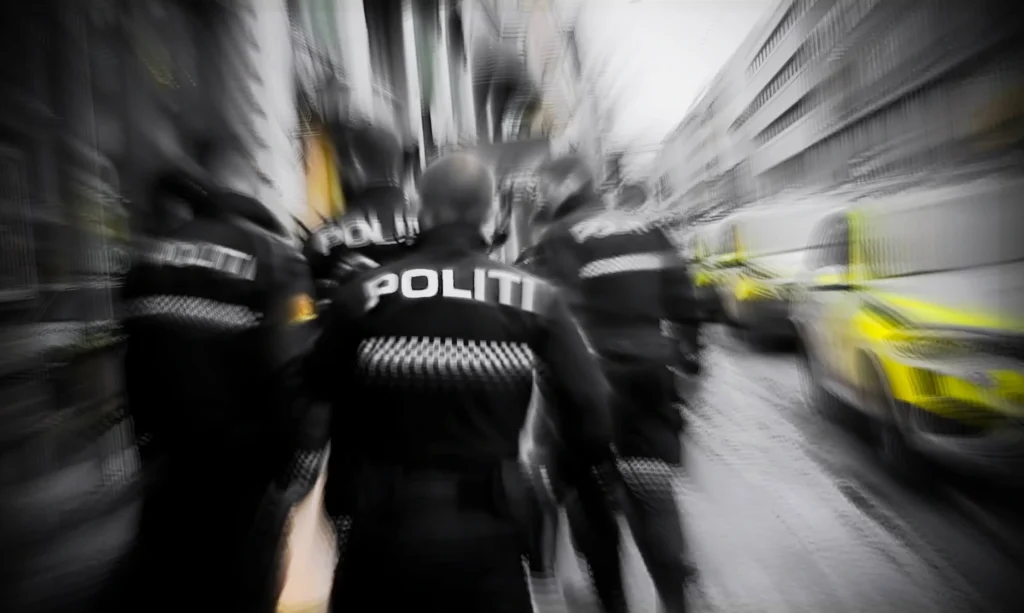
The Norwegian Bureau for the Investigation of Police Affairs (Spesialenheten for politisaker) is officially defined as an independent government agency under the supervision of Norway’s Ministry of Justice. Its stated mission is to investigate alleged criminal acts committed by police officers during their duties. In theory, its existence is a safeguard for the rule of law, a firewall meant to separate law enforcement authority from impunity. It is the agency where complaints that the police themselves cannot or should not investigate are referred, and it is supposed to uphold public trust in a security institution that wields power, arms, and legal authority.
However, the gap between this definition and the agency’s actual function, as revealed in its annual reports, is impossible to ignore.
Thousands of Complaints, Virtually No Accountability
According to Spesialenheten’s official 2023 annual report, the agency received 1,157 complaints against police officers. Only 399 cases resulted in a formal criminal investigation, while the overwhelming majority were closed at an early stage. Most strikingly, only about 3 percent of all complaints resulted in any legal consequence, whether charges, fines, or conditional punishment. These figures are not journalistic estimates but official acknowledgments from the agency itself.
This pattern is neither exceptional nor accidental. Consecutive reports reveal a consistent trend: increasing complaint numbers, nearly universal closure, and a tiny fraction of cases reaching criminal accountability. At this point, the agency’s reference to “high standards of proof” functions less as a legal safeguard and more as an institutional filter, removing cases from the system rather than advancing justice.
Legal Architects Beyond Oversight
The structural flaw is even more striking. By law, Spesialenheten’s jurisdiction is limited to police officers only, excluding police lawyers or legal advisors who play a central role in case preparation, fact adjustment, and strategic decisions. This limitation was publicly confirmed by Rune Fossum, Head of Investigations, in 2023, when he informed a human traffickingvictim that the agency has no authority over police lawyers, regardless of their influence on the case.
The practical implication is stark: the “legal architects” who design cases, determine their direction, and convert suspicion into formal charges remain beyond independent oversight. In this vacuum, files accumulate, cases repeatedly collapse in court, and internal review or institutional accountability rarely occurs. More than twenty seven lost cases, documented in records and public files, triggered no serious questioning about potential misuse of legal authority or the impact of these failures on the credibility of both justice and the police.
Collusion and Cover-Up: 2022 Smuggling Case
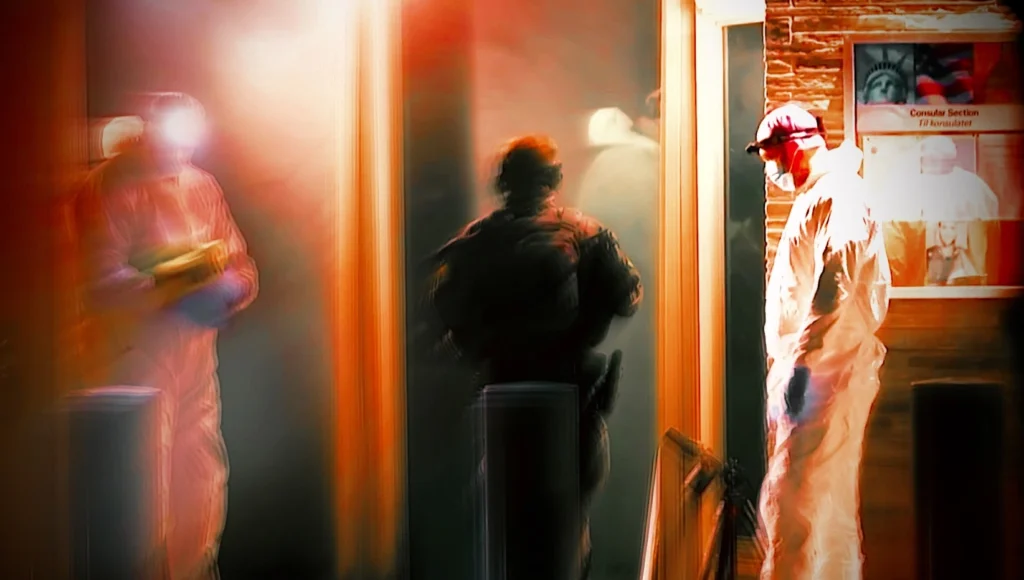
This structural failure peaks in incidents documented in 2022, where publicized files indicate that a coordinator of human smuggling operations resided in a police officer’s home. According to these documents, the officer cooperated with the individual and received legal support through police lawyers and their networks, effectively providing official cover and protection from accountability. Despite the severity of the case and its overlap with organized crime and law enforcement, it was shelved by Spesialenheten, without a thorough investigation or public accountability.
Oversight or Image Management? Public Trust Eroded
At this point, the central question is unavoidable: what is the real function of Spesialenheten for politisaker? Official numbers, structural limitations, and the record of case closures point not to an agency dismantling institutional failure, but to a body that manages harm, protects the image of the police, and offers a formal demonstration of “integrity” for domestic and international audiences. When cases are routinely closed, sensitive files are shelved, and the legal architects escape scrutiny, oversight ceases to be oversight and instead becomes part of institutional image management.
Thus, the problem lies not in the absence of a mechanism but in its actual function. A mechanism exists, operates, and issues reports, but it does just enough to prove that the system “examines itself,” not enough to hold itself accountable. Here, precisely, public trust erodes: not because mistakes occur, but because the institution tasked with revealing them appears primarily concerned with closing cases rather than addressing them.
The Special Unit does not reflect justice; it operates to freeze violations and protect the police’s failures and internal networks. It is more like a makeup room for the police’s image: correcting distortions, rearranging facts to appear flawless, rather than a genuine investigative body for police affairs.
Sources: