In cities that pride themselves on calm, danger is not defined by what happens…
but by what is allowed to happen.
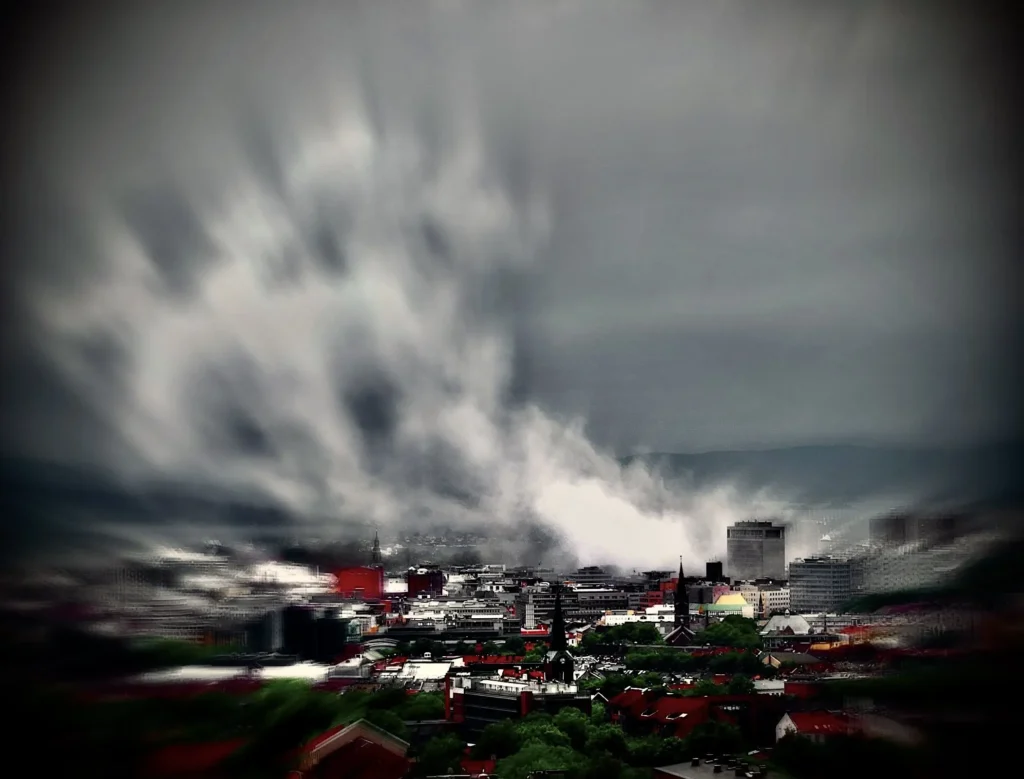
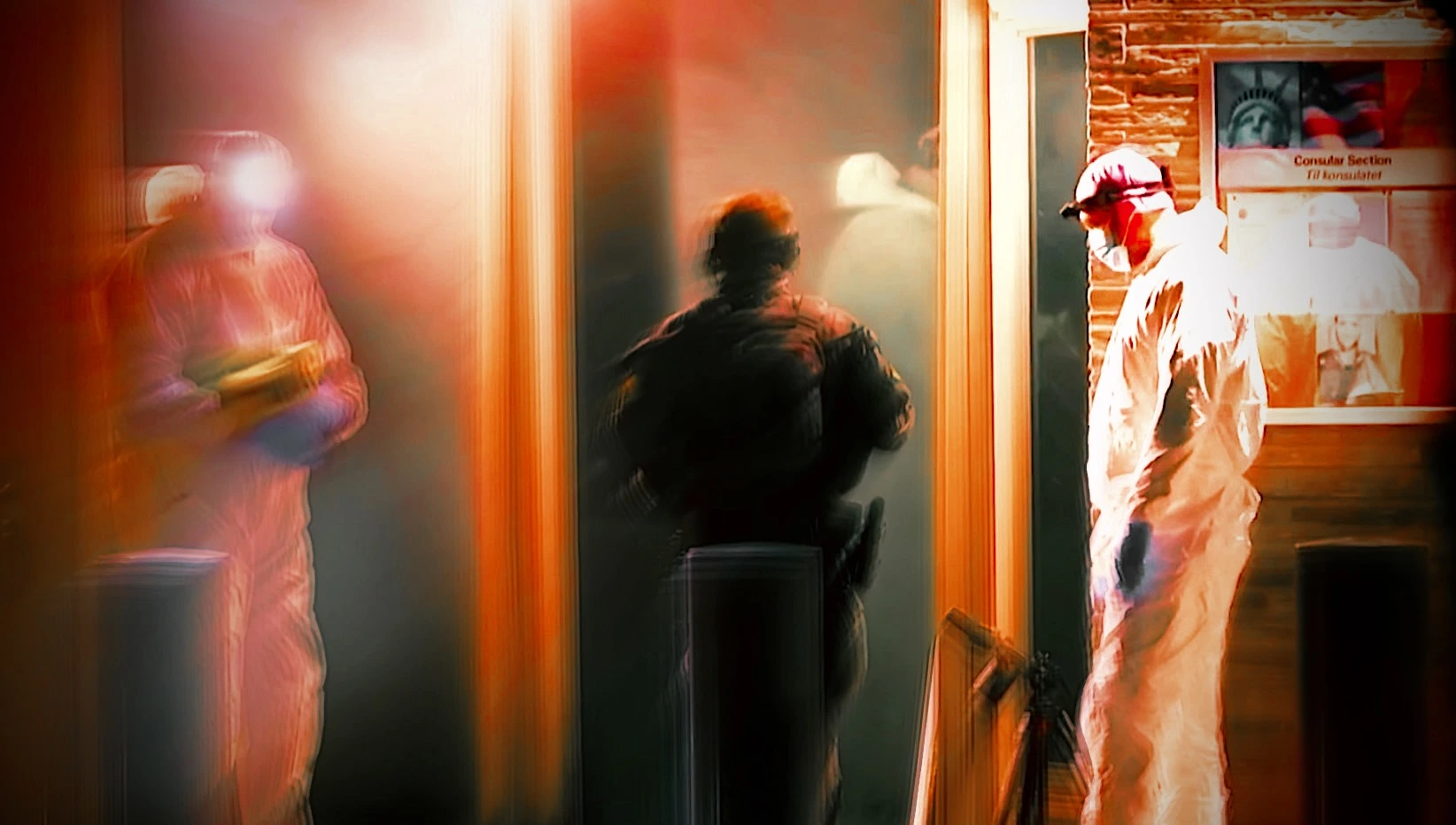
In Oslo, an explosion echoed near the U.S. Embassy on Sunday, March 8, 2026. The device caused material damage to nearby structures, shattered windows in adjacent buildings, and sent shockwaves across the diplomatic quarter. No one died. No blood filled the streets.
The suspects three men in their early twenties, previously unknown to authorities, with no prior flags or surveillance were able to plant and detonate the device without interference. They had assembled explosives in a rented apartment in central Oslo and carried schematics and digital instructions detailing reconnaissance of the embassy and surrounding diplomatic buildings.
And that is precisely the problem.
Because the absence of tragedy is now being mistaken for the presence of control.
For Oslo Police District, the case was described as “contained,” in an attempt to downplay the failure to prevent the attack before it occurred. Arrests were made on Wednesday, March 11, 2026, just three days after the explosion, in a coordinated operation in the Grønland district of Oslo. The suspects were found with explosive components, detailed notes, and personal journals outlining their plan. Statements emphasized the stabilization of the situation after intervention, even though this stability came after an incident that could have been prevented. Authorities in Oslo justified the delayed detection by noting that the suspects were “not known,” that there were “no prior indicators,” and that such incidents are “difficult to detect.”
But containment, in its most honest definition, is what happens after failure.
What Cannot Be Seen or Chosen Not to Be Seen
The official outline is simple:
a crude device, material damage, swift arrests.
But this simplicity hides something far less comfortable.
Three individuals unknown, unflagged, unmonitored
move through the system without friction.
They plan.
They assemble.
They act.
No interruption.
No interference.
No resistance.
This is not invisibility.
This is passage.
And the question is no longer whether the system failed to see
but whether it has become structurally incapable of seeing in time.
2011 Was Not a Lesson It Was a Warning
In the 22 July 2011 Norway attacks, the failure was undeniable. Not just in stopping the attacker, but in the time it took to understand what was unfolding.
Afterward, the language was confident:
lessons learned, systems improved, gaps addressed.
Fifteen years later, the violence is smaller.
But the sequence is identical:
The act happens.
Then comes the response.
Then comes the explanation.
For institutions like Oslo Police District, this pattern should no longer be acceptable.
Because repetition, at this point, is not coincidence.
It is structure.
Security That Performs But Does Not Prevent
Everything appears to be in place.
Barriers.
Surveillance.
Protocol.
And yet, an explosive device reaches a diplomatic target and detonates.
This is not a failure of presence.
It is a failure of function.
A system that looks complete but cannot interrupt action before it begins
is not secure.
It is convincing.
And there is a difference.
The Problem Is Not the Unknown It Is the Unquestioned
The narrative that follows is familiar:
“They were not known.”
“No prior indicators.”
“Difficult to detect.”
But this explanation, repeated often enough, becomes a shield.
Because the real issue is not that individuals are unknown
but that the model itself depends on them being known in advance.
And when they are not, the system has nothing to fall back on.
For Oslo Police District, this is no longer a technical gap.
It is a conceptual one.
Speed Is Not Foresight
Yes, arrests were made quickly.
Yes, the suspects were identified.
Yes, the situation was stabilized.
But speed after impact is not evidence of control.
It is evidence of reaction.
And reaction, no matter how efficient, always begins too late.
The central question remains untouched:
Why does intervention only begin once the event has already taken place?
A System Dependent on Timing
No casualties.
This has been repeated as reassurance.
But in reality, it reveals something far less comforting:
That the outcome may have depended less on preparedness
and more on timing.
Minutes.
Chance.
Circumstance.
If that is true, then what is being presented as stability
is, in part, probability.
The Illusion of Improvement
There has been progress.
Faster arrests
Better coordination
Stronger post-incident control
But the core remains unchanged:
No early detection
No disruption before execution
Surprise remains intact
The system has improved in managing consequences
not in preventing causes.
And that distinction matters more than any metric publicly presented.
Memory Without Consequence
The events of 22 July 2011 are remembered.
Analyzed. Documented.
But memory, on its own, does not transform institutions.
Because transformation is not measured in reports
but in outcomes that never occur.
And here lies the uncomfortable reality:
The absence of prevention is not visible.
But it is measurable.
And it is repeating.
The Question That Remains
What happened in Oslo is not an isolated incident.
It is part of a pattern that has yet to be broken.
For Oslo Police District, the challenge is no longer operational.
It is structural.
Because the real test of any security system is not how it responds
but whether it allows the event to occur at all.
And right now, the answer is becoming harder to ignore:
It does.
“In Oslo, prevention has never been a priority for the Oslo Police District, but rather a game of waiting. Every explosion proves that the police are as inept with the past as they are unprepared for the future.”